For Ian McNaughton, Harper College is not a two-year school. The 27-year-old Harper student has been studying on and off for eight years. An ADHD diagnosis has helped him learn why the journey has taken longer, but there were still other factors at play.
In his early twenties, the COVID-19 pandemic hit, disrupting McNaughton’s college education.
“And that sudden shift,” McNaughton said, “I mean, it was dramatic. A lot of us were going through it; for a lot of us, it was dramatic. I ended up missing a big assignment because I didn’t know what I was doing.”
McNaughton was not the only student to have been thrown off track by COVID-19. Years later, students still felt the effect of the world-stopping pandemic.
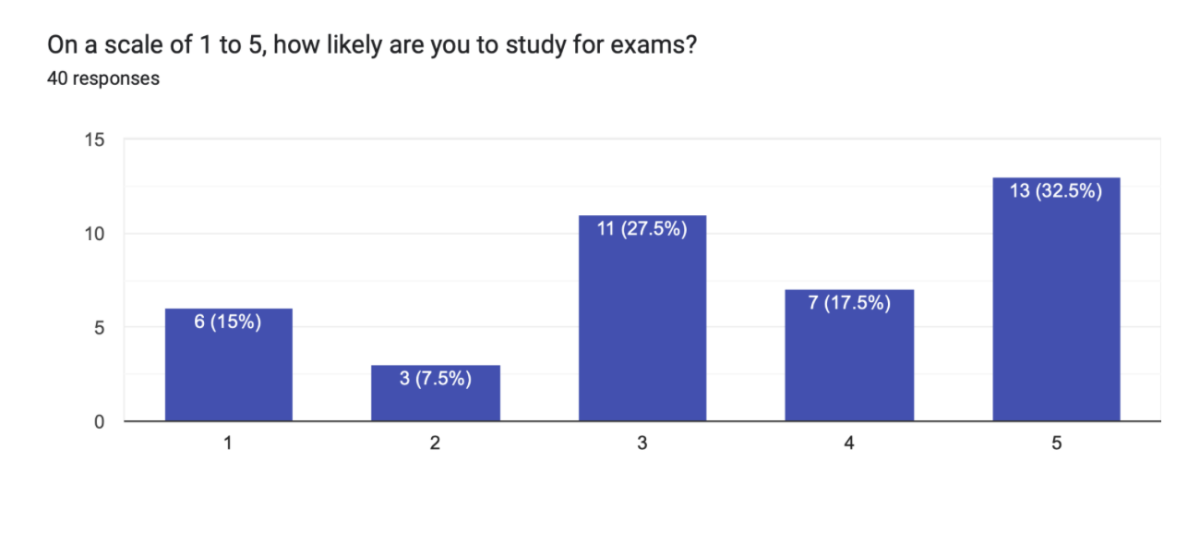
Harbinger surveyed 40 Harper students, about two class sizes worth, and asked them to rate their motivation this semester. Of those 40 students, 37.7% rated their burnout levels as extreme.
Answers for these benchmarks varied, with some students reporting that they were always on time, and some reporting that they skipped class often. Some students reported that they studied hard, while others hardly touched their textbooks.
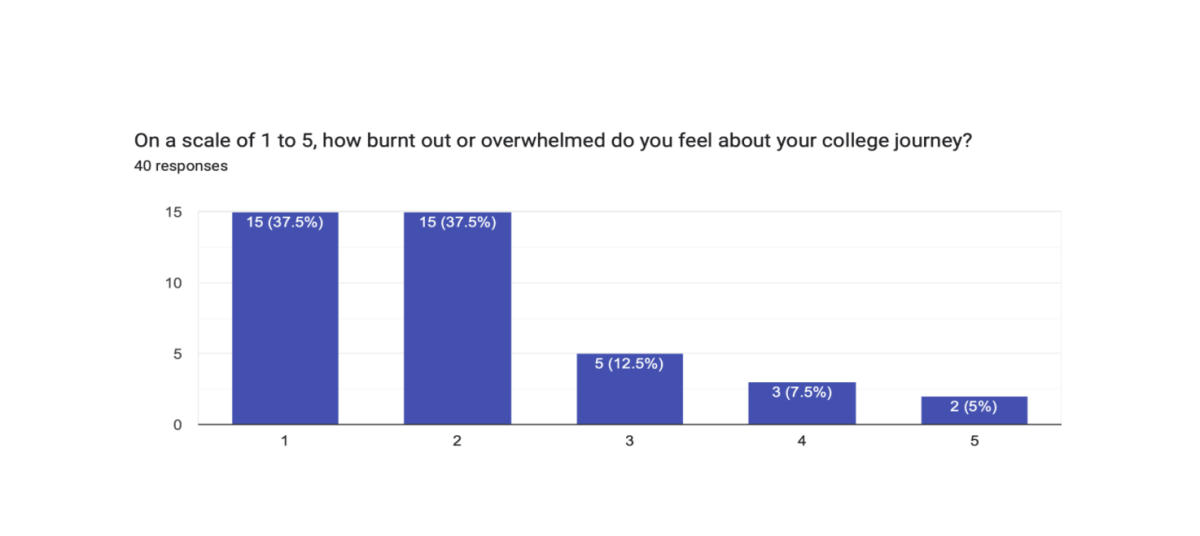
Despite the range of answers for most questions, their drive and burnout levels were all similar. When asked to rate their burnout levels, with one being the worst, 75% of these students rated themselves a two or lower.
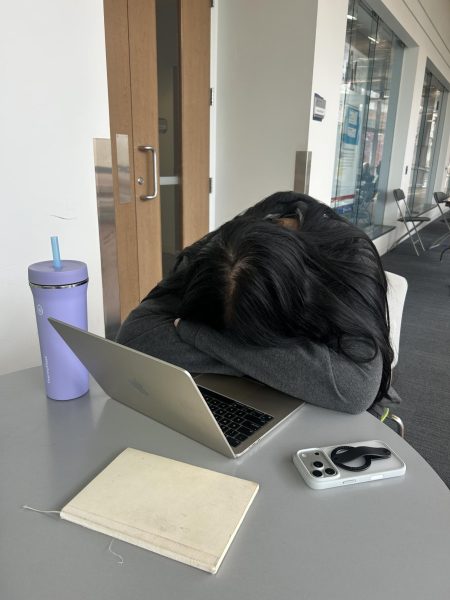
“I’m so tired, like I’m falling asleep in class,” said 23-year-old Harper Student Madison Tiani. “I’m never going to graduate.”
“I would say I’m pretty burnt out, but also a lot of family stuff, personal stuff,” Harper student Aiden Branss said. “I’m dealing with some stuff with my dad, who got a big diagnosis, and I’m kind of like his caretaker at the moment. So I’m kind of prioritizing stuff at home over school, you know.”
Professors have been on the receiving end of these results and have also noticed the shift.
Doctor Ye Li reports that only “70% of students regularly attend” her 10 am class, which is significantly more than her 8 am class.
“Right now, we have 488 students who have RSVP’d,” wrote Doctor Jaime Riewerts. The Harper Liberal Arts Dean emailed his faculty in early April, asking them to encourage students to attend the graduation ceremony. “Our goal is 850, so we still have some work to do.”
Doctor Ye Li reports that only “70% of students regularly attend” her 10 am class, which is significantly more than the 8 am class.
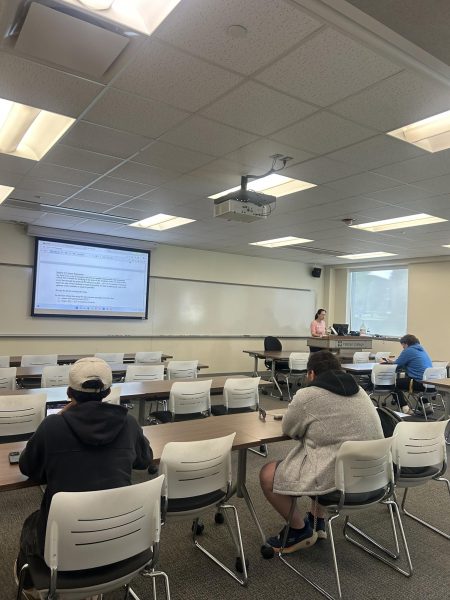
Professor Pardess Mitchell, Department Chair of Kinesiology and Health Education, agrees. “I have definitely seen students struggle more so this semester than I’ve had in past semesters, and I’m not really sure why that is happening,” she said. “So, almost a little apathy when it comes to student behavior.”
What is still lingering in the air? Where is everyone?
In this survey, students reported that the causes of burnout ranged from personal struggles to economic shifts, ICE raids, and war on the horizon.
“It’s hard to take anything like school seriously when I won’t ever be able to afford a house, and honestly, at this point, an apartment,” one Harper student writes. “How can I care about turning in a math worksheet on time when we have AI cameras being installed across the country, a secret police kidnapping immigrants, a war in Iran, and the threat of nuclear war every day?”
While students continue to reach out to Harper College’s many student support centers, they have not always followed through to get the help they seek.
“We have noticed just a general, either a higher increase of canceling appointments or rescheduling appointments,” said Carol Trejo Kroeger, Counseling Services Manager at Harper College.
According to a 2026 study from the Pew Research Center, roughly two in ten young adults under 30 feel they are doing well at managing their stress.
“I’m hearing from just lots of people on campus, just a general feeling of being overwhelmed,” said Kroeger. “It’s like, we don’t even know where to start, where to begin. And so we don’t.”
This shift in motivation is affecting professors as well as students, contributing to a looming anxiety over everyone’s heads.
“I think it’s just having an impact,” Doctor Brian Cremins, English Department Chair, said, “and that’s what I’m seeing, at least, and not just amongst my students, but amongst my friends and colleagues as well.”
“I just feel like this semester feels really long,” agrees Professor Margaret Bilos, Communications Department Chair. “So I think that that is impacting just how much you want to push yourself out there.”
Though motivation has dropped across the board, some were still able to see the silver lining. Some professors are opting to explore alternative methods of instruction, and it seems to yield positive results.
“I also want to say that just because I was burnt out in one class, does not mean I’m burnt out in another,” said Harper freshman Olivia Sbarboro.
In a discussion-based philosophy class, McNaughton thrived. The professor “put a really big emphasis on Socratics,” McNaughton said. “I felt like that was a great environment for, not just myself, but for others to learn from their peers as well as a professor.”
Professor Andrew Levin, Interim Department Chair of Political Science, said he designs his classes with a variety of assignments to give his students the autonomy to explore education in a format that suits them. Levin offers podcast submissions and zines for students to submit more creative projects.
Levin compared the students’ journey to climbing a mountain, letting students know that just because they may experience ‘false peaks,’ “it doesn’t mean you’ve got to turn around.”
There may not be a one-size-fits-all answer, but there is consensus that most everyone needs help from others to thrive. For both students and professors, it seems that leaning into a supportive community while exploring their own educational journey may be the answer.
“Our whole purpose as a democratic, public, open-access institution is to give people a bridge into the world that they are imagining for themselves,” said Dr. Cremins. “I think our work at a community college, and all of us, students, faculty, is more critical now than ever.”