Going into this editorial, I thought I had a decent understanding of AI water use. AI data centers consume large amounts of water, so using AI is harmful. Simple, right? Well, it turns out I had only a very superficial understanding of a very complex topic.
After doing several hours of research, it felt like I had barely scratched the surface. However, what I did come away with was that the development of hyperscale data centers and AI water use needs greater supervision and planning. I also believe that it’s important to learn the pros and cons of AI, as well as how to use it effectively as a tool.
Overall, I’m pretty skeptical of AI, generative AI in particular. However, it’s become clear that there’s really no avoiding the technology at this point. It seems to be slowly infiltrating most aspects of our lives, from work to education to entertainment.
Since it’s such a broad topic, there are many aspects of AI use to discuss. I want to touch on one specific aspect: hyperscale data centers and their water use.
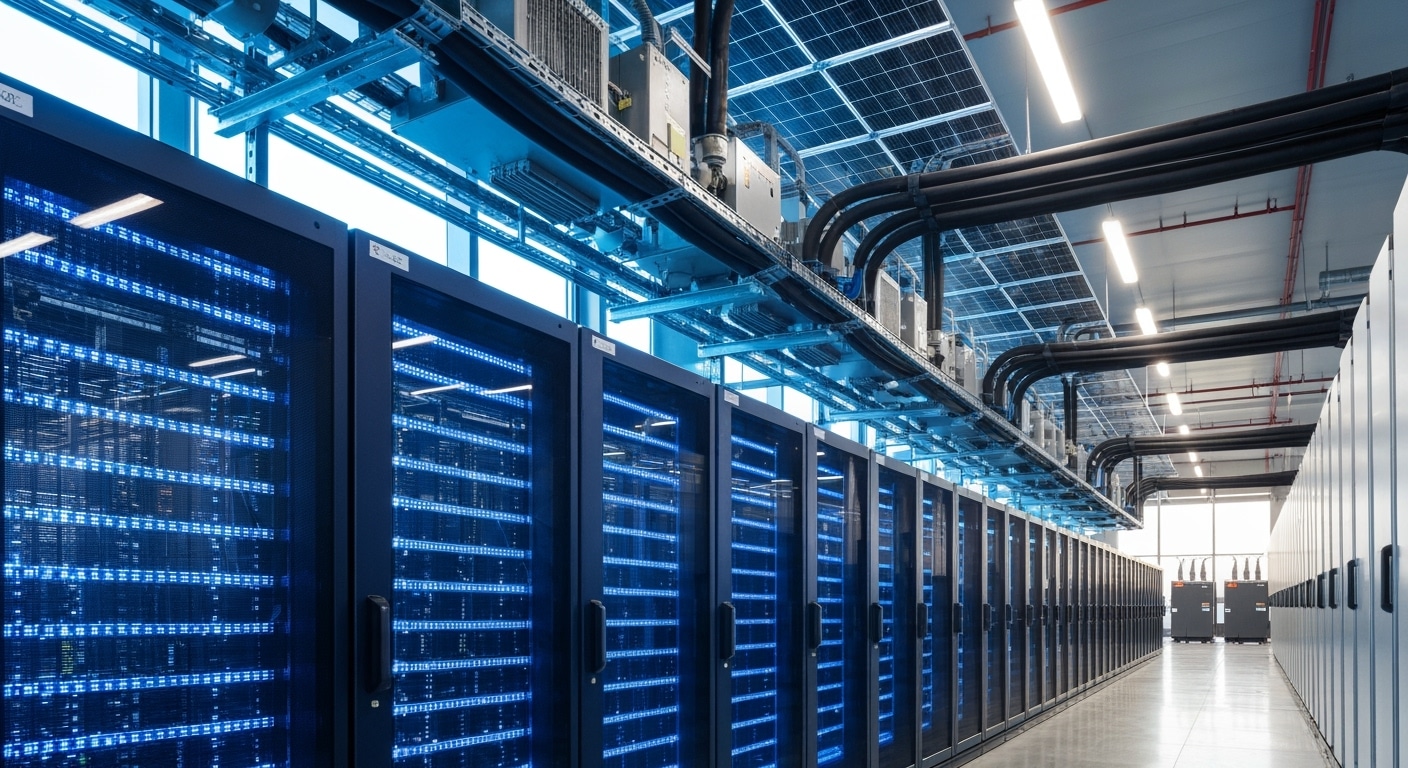
According to IBM, “a hyperscale data center is a massive data center that provides extreme scalability capabilities and is engineered for large-scale workloads with an optimized network infrastructure, streamlined network connectivity and minimized latency.”
Hyperscale data centers can be used for data analytics, storage, and processing. However, they’re also essential for AI training and use. Due to the rapid growth of AI, data centers are popping up all over the US.
There are currently 224 planned data centers in the Great Lakes region of the United States, according to a report by the Weldon Cooper Center for Public Wellness. While it’s important to keep in mind that not all of these data centers will be used for AI, a portion of them are being developed by Microsoft, Google, and Meta. We know that these companies are leading developers in the AI business. According to the Synergy Research Group, the primary driver for an increase in hyperscale data centers is generative AI.
A subject of debate around hyperscale data centers is whether or not their water use is truly damaging to the environment. The exact data can be tricky. Depending on which factors you consider, the numbers can look either lower than you’d expect or scarily high. By playing around with the numbers a little bit, both proponents and critics of AI can use the data to prove their points.
Regardless, we do know that data centers still require a significant amount of water. A report by the Environmental and Energy Study Institute explains that water is needed to cool the centers’ chips, which heat up as they process data. Although exact statistics vary, the number of gallons of water used by a medium-sized data center in a year is in the millions. The largest data centers use up billions of gallons of water.
AI isn’t the only industry that uses up large amounts of water; many power plants, for example, also require large amounts of water to generate the energy that we rely on. However, if the era of AI arrives as promised, the number of data centers for AI use will continue to increase along with water use.
Data center water use does depend on several factors, including location, climate, and water availability. That’s why the Great Lakes region is seeing an increase in data centers: our climate and abundant water make it an ideal location for this kind of infrastructure.
Understanding that AI water use is a complex topic is important. However, instead of ignoring the situation entirely and burying our heads in the sand, we must become more educated on the matter. I believe that students, in particular, must be taught more about the consequences and uses of AI as it becomes a part of our lives.
Additionally, the government needs to work more closely with companies like OpenAI, Google, Meta, and Microsoft to find a sustainable way to use our water as AI continues to expand. Additionally, we must demand more transparency from these companies in terms of how they’re using water, in addition to energy use and CO2 emissions.
For a lot of us at Harper, AI will increasingly become a large part of our lives, whether we like it or not. It’s our responsibility to understand how it uses our resources. We must understand that technology like this isn’t free, and that if we want it to be something that enhances our lives, we must understand the cost that comes with it.